H.I.I.T for Fencing: Keeping fit in a small space with limited time!

It seems appropriate at this time when many of us are in lockdown to try and increase or maintain our fitness levels. A few years ago I was looking into the best way to do this at home. Tabata or H.I.I.T was suggested and trying these exercises worked (and still works) for me.

The Histoty of Tabata

High Intenstity Interval Training or Tabata training was discovered by Japanese scientist Dr. Izumi Tabata and a team of researchers from the National Institute of Fitness and Sports in Tokyo.

Research was conducted on two groups of athletes. The first group trained at a moderate intensity level while the second group trained at a high-intensity level. The moderate intensity group worked out five days a week for a total of six weeks; each workout lasting for one hour. The high-intensity group worked out four days a week for six weeks; each workout lasted four minutes and 20 seconds (with 10 seconds of rest in between each set).

The results were conclusive; Group 1 had increased their aerobic system (cardiovascular), but showed little or no results for their anaerobic system (muscle). Group 2 showed much more increase in their aerobic system than Group 1, and increased their anaerobic system by 28 percent!

In conclusion, high-intensity interval training had more impact on strength and conditioning.

How does H.I.I.T work?

Each exercise in a given workout lasts only three minutes, but it’s likely to be one of the longest three minutes you’ve ever endured. The structure of the program is as follows:

  • Work out hard for 20 seconds
  • Rest for 10 seconds
  • Complete 3 rounds

You push yourself as hard as you can for 20 seconds and rest for 10 seconds. This is one set. You’ll complete 3 sets. You can of course do more or less depending on your fitness levels. 

H.I.I.T for fencing

The benefits of H.I.I.T for fencing are as follows:

  • Works both cardio and strength.
  • Takes almost no space.
  • Takes very little time.
  • The H.I.I.T exercises shown in the video work all body aspects.
  • You start off at your own level.
  • The sets and timing (3 mins) represent both rest and recovery periods in a bout.
  • It can be done with no equipment.

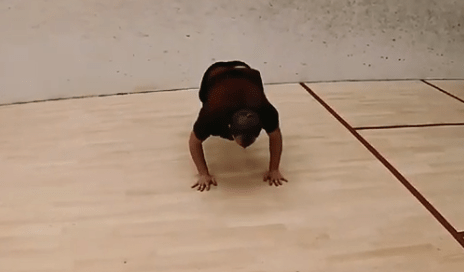
You can do pretty much any exercise you wish. You can do squats, push-ups, burpees or any other exercise that works your large muscle groups. If you have more time and space you can combine them with agility ladder workouts or kettlebells.

H.I.I.T is great to get a quick workout if you’re short on time and you want to improve endurance and speed. It’s ideal when you can’t get to the gym!

Have a look at the video below. Leave comments and of course feel free to also subscribe to my YouTube channel “Learntofence”.

Using rhythm and syllables to teach fencing footwork – Coca-Cola Footwork.

As fencing coaches (and fencers) we all learn fencing footwork from the very first session. Being able to move efficiently is a fundamental part of fencing. Up until recently I’ve taught fencing footwork in a standard way step – forward, step back, lunge, recover etc etc.

However, recently whilst working on my coach education I headed up to Salle Ossian where I was introduced to the concept of Rhythmic Footwork. It uses vocal rhythm and words with a certain amount of syllables to teach footwork to beginners. It’s also useful for running ANY footwork session.

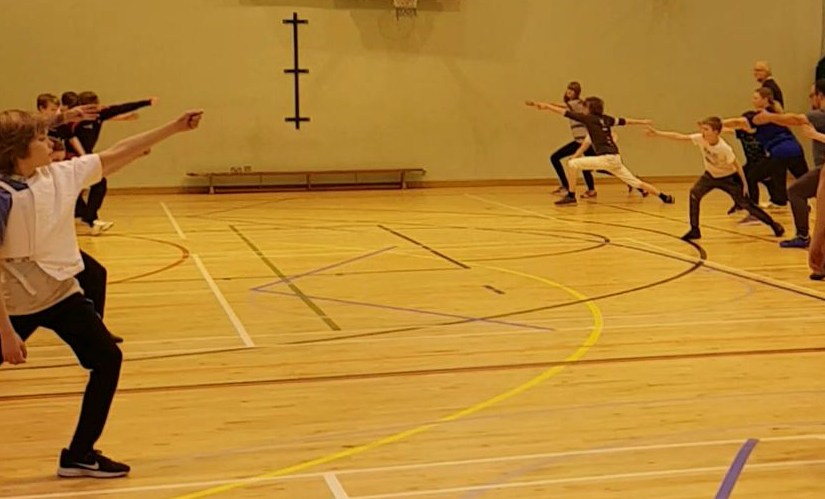
The concept is as follows. Instead of saying things like – “step forward”, “step back” or “lunge” we use the words with the relevant amount of syllables for the movements. We use common words that are related to food but you can use whatever works for you or interests the beginners. As an example we use “Tea” for a step forward as it has a single syllable. We use cof-fee for two steps back. As you will see in the video below changing the rhythm of the word allows you to change the rhythm of the footwork.

We found that when we started using this system not only did it make footwork sessions more fun and kept beginners entertained for longer, but it allowed us to quickly teach complex footwork patterns in a fun way. The system really accelerated the learning of the fencing footwork. In a 20 minute session we could take a beginner from a simple step forward to a “Vezzali shuffle” (Pep-si-co-la) or even a combined group of footwork such as a “step, balestra, lunge” (tea-cake-juice). The most complex is “The Korean Hop”. This has 3 syllables so we use (Ba-Na-Na).

Overall the benefits were as follows:

  • Accelerated learning of complex footwork patterns.
  • More entertaining than standard footwork teaching.
  • Allows the coach to control and vary the rhythm of the footwork.
  • Makes it easy to play games like Simon Says.
  • Beginners remember the footwork names better as they are related to words they know.
  • It is simple to combine words together – tea, cake, juice.
  • It provides the opportunity for chunking, to be used as part of other movement patterns. (So tea, cake, juice may be shortened to “Triangle” for example).
  • It gave the beginners and kids their own language that could be used to pass on the footwork easily.

I have implemented this at both West Lothian Fencing Club and at Heriot-Watt University and the results have been amazing.

Below is a video featuring Ben Schuessler giving examples of Rhythmic (Coca-Cola) footwork in practice. Thanks to Coach Phil Carson for the intro to this.

Feel freee to leave a comment and tell me what you think. Also, I have a Youtube channel with coaching content that is updated often. Please do subscribe if this sort of content interests you!

https://www.youtube.com/channel/UCyfC9gZWzY_Vaf9dXrXcJqg

Who is Coach Kev?

Coach Kev – Thanks to Gav McMenemy for the photo!

I started fencing back in 1982 as soon as I got to my high school, Fraserburgh Academy at the age of 11. (I wanted to be a pirate). Thats where my school club in the North East of Scotland was situated. We were coached by Mr.Torrie who gave up all of his time for free as a volunteer to not only coach us, but to take us to competitions around Scotland. I have been hooked ever since and I am forever grateful for the time he spent running the club, carting us around and teaching us armoury.

So why have I created this blog or coach even?

  • I decided I wanted to give back to the sport after a reasonably successful fencing career having been Scottish Junior Champion, Scottish Collegiate Champion and a Youth and Senior Internationalist from 1986-1998. (I am lucky enough to still be involved as part of a very successful Scottish Veterans foil team now, who recently took gold at the Commonwealth Champs in Australia in 2018.)
  • I was lucky to have been able to do this. It’s not only a unique sport which keeps you fit and makes you think; but there are so many different aspects to it. First of all there are the 3 different weapons which are interesting in themselves. Then there is refereeing, coaching and technical aspects such as armoury (or repairing the kit). All of these things interest different groups and allow individuals within the sport to develop and follow their own path.
  • Another thing was the cameradery of a good club, the experience of competition, of being part of not only a club team, but a national team. I wanted to help give others that opportunity if I could.
  • I love coaching. The feedback you get back from seeing the progression of teams or individuals over time to the single dawning of a realisation as something just clicks in a childs mind is fantastic. Another fun thing is the excitement of when your club members (old or young) tell you they did X and it worked!
  • Being able to pass on my experience from many years of fencing and a few short (and intense) years of coaching is a joy. I am lucky to have great mentors who are providing new and interesting ways to accelerate learning. TBH, although I have fenced for over 30 years I am now just learning to fence.
  • Coaching is great. Just when you think you have learned a lot that you can pass on, more things (including new techniques and ideas) appear or your thoughts on things change through some experience. At the end of the day I don’t know how much I know, and I will never know how much more is out there – everything just keeps evolving.

Why I am a volunteer coach

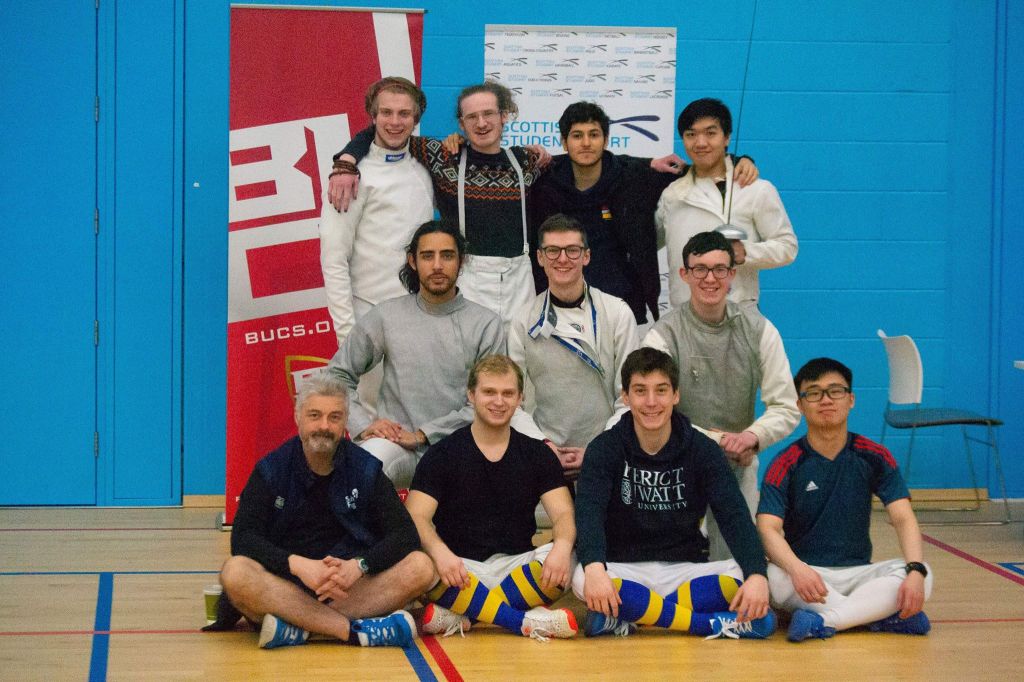
The Heriot-Watt Unversity team 2019-2020
  • In some places fencing is an expensive sport. Especially when you get to a high level. In America especially clubs are generally expensive and the sport, although spreading is become more elite there. I am keen to spread fencing to as many people as possible. Thats the reason I don’t charge for lessons or for running the clubs I help coach at. This keeps the costs low and allows as diverse a group as possible to join in and experience what is a fantastic sport. It also gives many a level playing field they would not have as only the better off can afford private lessons. Of coure, any sport played at elite level costs money, mostly due to travel, accomodation and equipment costs.
  • As a registered, qualified coach who has experience of supporting national teams in all age groups, I hope to reduce the costs a little by standing by, what my first fencing coach did, and not charging for lessons.
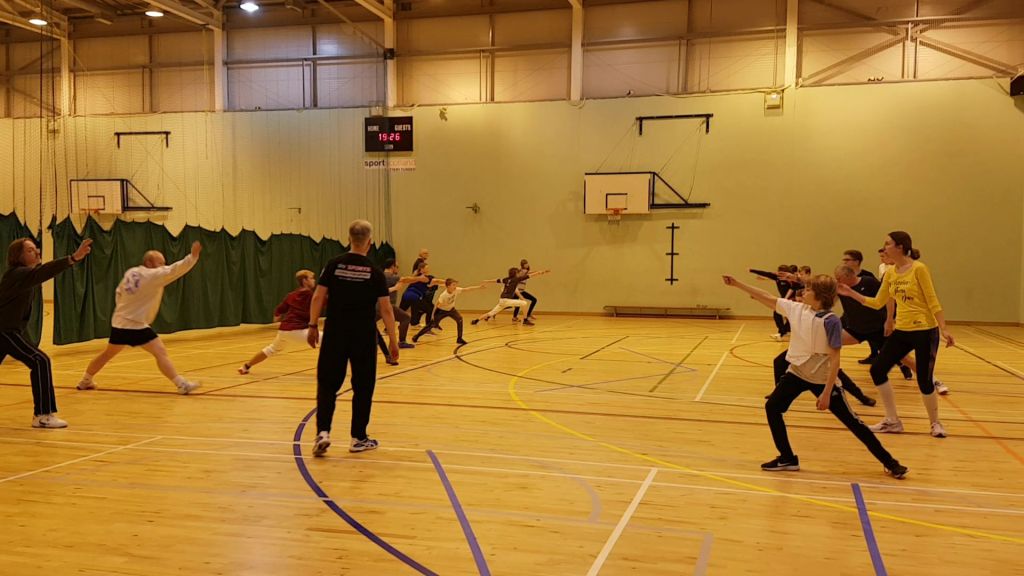
Footwork at West Lothian Fencing Club

So, this is why this blog exists. As part of an ever changing journey of discovery as I learn new things I aim to share them with the wider community. Take it or leave it – the choice is up to you, the reader. The last year has been an interesting learning curve and the next few blog posts will include my thoughts and experience on Games for learning, sub-contracting coaching, constraints based learning, data and video analysis and using technology for improvement. I do hope that the information I provide will be of use…or even start debate!

Coach Kev